Start with the care label and the clothes you actually wear
You do not need a complicated laundry system to help everyday clothes last longer. Start by noticing which pieces you reach for most: perhaps a favorite T-shirt, work trousers, jeans or a lightweight sweater. Those are the items worth giving a little extra attention. Check their care labels before they go into the wash, especially if they are new to you. The label is a useful starting point for water temperature, drying and whether an item needs gentler handling.
Also consider whether a garment needs washing yet. Underwear, socks and clothes that are sweaty or visibly dirty should go in the laundry. A clean outer layer worn briefly may only need airing out. Between wears, hang it where air can circulate rather than leaving it in a pile. This small pause can reduce unnecessary washes while keeping your wardrobe ready to wear.
Make washing gentler without making it a project
Before starting a load, separate items in a way that protects them. Keep heavily soiled clothes away from lightly worn ones, and put rough pieces with zippers or hooks apart from fabrics they might snag. Turn printed tops and dark clothes inside out, close zippers, and place small delicate items in a mesh bag if you have one. There is no need for perfect sorting; a few deliberate choices can prevent avoidable damage.
Use the care label to choose a cycle and temperature. For many everyday loads, a cooler wash is a reasonable place to start if the garments and their level of soil allow it. Measure detergent according to its directions and your load rather than adding extra for good measure. If clothes come out feeling coated or rinse poorly, too much product may be part of the problem. Give clothes room to move in the machine, and choose a gentler cycle for items that stretch, snag or lose their shape easily.
Handle stains before they become a bigger chore
When something spills, act when you can, but keep the response simple. Blot liquid with a clean cloth instead of rubbing it across the fabric. For a washable garment, rinse or spot-treat according to its care instructions, and test any unfamiliar product on a hidden area first. Different stains and fabrics respond differently, so avoid assuming one treatment will work on everything.
Before putting a stained item in the dryer, check whether the mark is still visible. Heat can make some stains harder to remove. If you are short on time, set the item aside with a note or keep it in a separate spot so it does not accidentally enter the next load. That is often more useful than rushing through several treatments you cannot properly check.
Dry with shape in mind
Drying is a good place to adjust your routine without adding much work. Check the label before using a tumble dryer, especially for knits, stretchy clothing and pieces that might shrink. If machine drying is suitable, remove clothes once they are dry instead of leaving them tumbling longer than needed. Give each piece a shake and smooth seams or hems before folding; it may save you ironing later.
Air-drying can be useful for items you want to handle gently. Hang shirts on suitable hangers or a line, and lay heavier knits flat so their weight does not pull them out of shape. Make sure items are fully dry before storing them. If space is limited, choose just a few favorite or more delicate pieces to air-dry rather than trying to change your entire laundry routine at once.
Keep a five-minute repair and storage habit
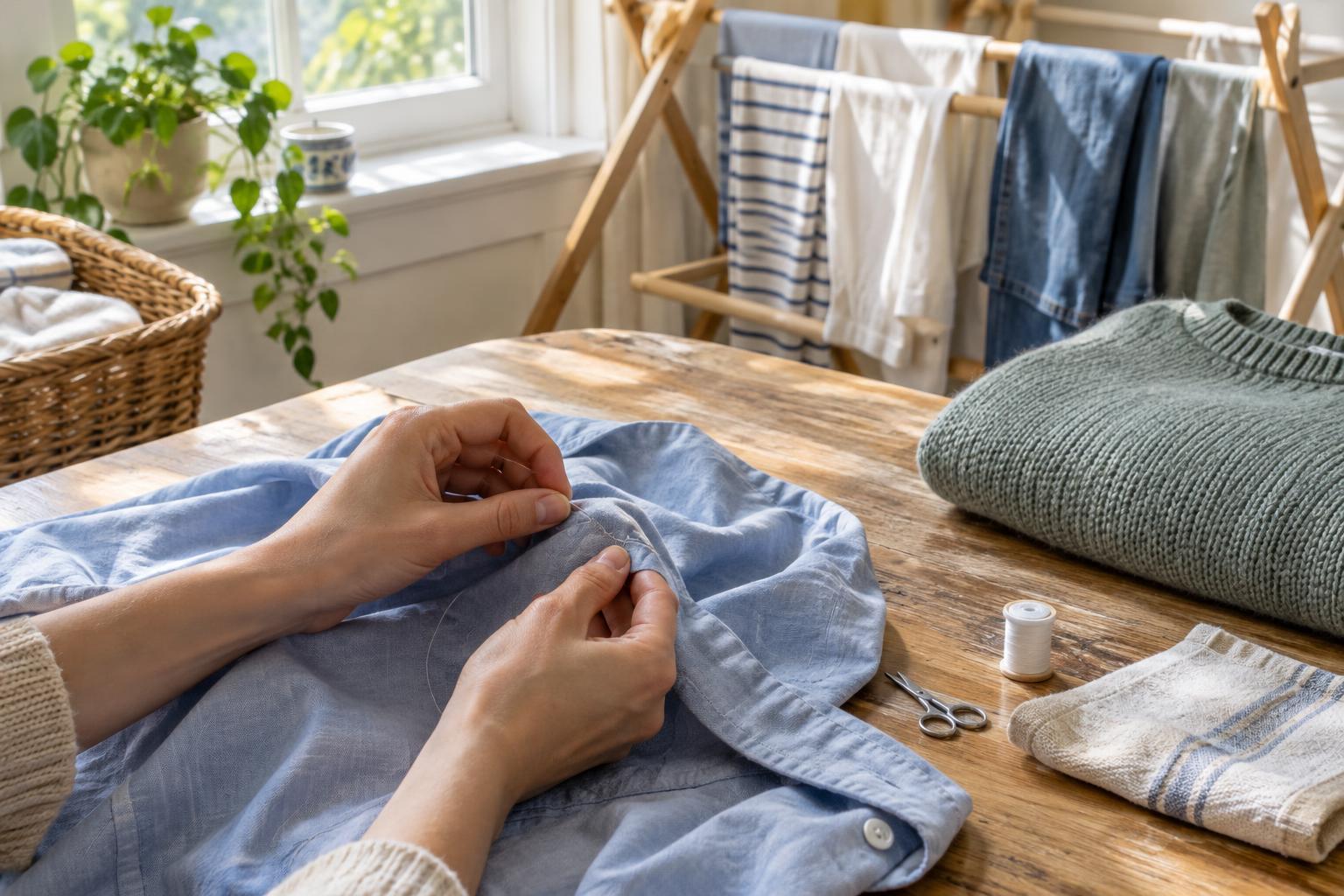
A loose button, small split seam or dangling thread is easier to deal with before it affects how you wear the garment. Keep a needle, thread, spare buttons and a small pair of scissors together in one place. When you notice a problem, move the item to a visible repair spot rather than returning it to the closet. A quick weekend check can turn one small fix into a wearable favorite again.
Store clothes so you can see and retrieve them without pulling at sleeves or straps. Fold sweaters and other pieces that may stretch on a hanger; hang garments that crease easily. Leave a little space where possible, and put clean, fully dry clothes away. Clothing care works best as a set of repeatable habits, not a perfect system. Pick one change for your next laundry day, then build from there.