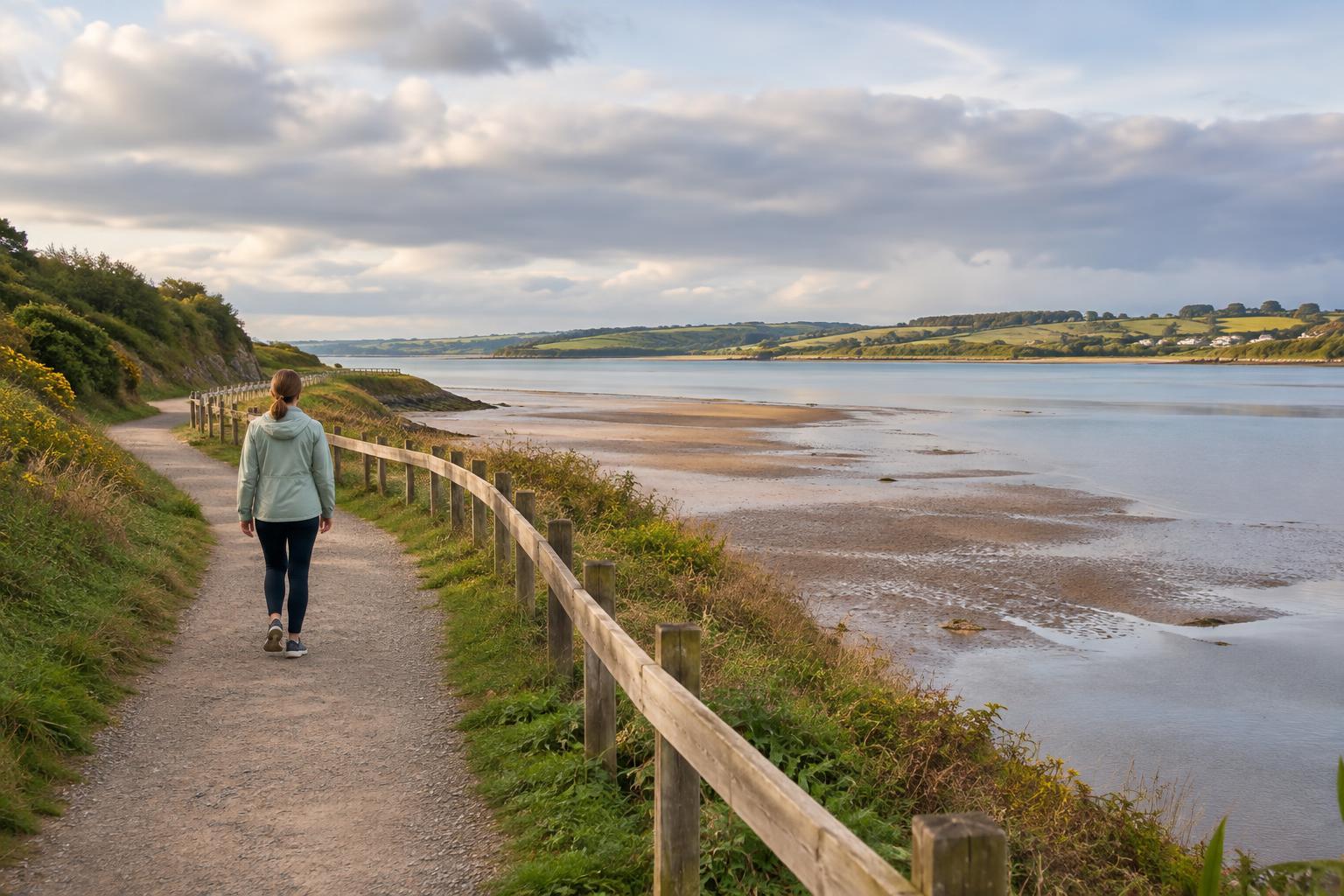
Start with the kind of walk you want
Waterfront walks can mean a paved promenade, a lakeside path, a harbor loop or a stretch of beach. Before picking a destination, decide what would make the outing worthwhile: an easy hour outdoors, a place to sit and watch the water, or a longer walk with varied views. That decision makes it easier to choose a route that fits the time and energy you have.
For a low-pressure weekend outing, look for a clear starting point and an obvious place to finish. A loop avoids retracing your steps, but an out-and-back route can be just as satisfying if you choose a landmark where you’ll turn around. Build in time for getting there, finding the entrance and taking an unhurried break. If the walk has to fit between other plans, a shorter route with several possible turnaround points gives you more control.
Check access before setting off
A blue line on a map does not always mean there is a continuous public path beside the water. Look for the actual trail or promenade entrance, and check whether the route crosses private property, has gates or includes a section that may close. Parks and managed trails may publish access information; signs on arrival are the final guide. If a route depends on one narrow passage or beach crossing, identify an alternative rather than assuming you can get through.
Match the surface to your group. Paving may suit a stroller or someone who prefers level ground, while sand, loose gravel, steps and muddy banks can make a short distance feel demanding. Also note where you can park or arrive by transit, whether there are restrooms, and how you’ll return to your starting point. A convenient bench, café or public green space near the entrance can provide a pleasant stopping place if the full walk does not work out.
Treat tides as part of the route
On coastal walks, the tide can change how much beach is available and whether a shoreline section remains passable. Check a tide forecast for the relevant location before leaving, then compare it with your planned walking window. The time of high or low tide alone does not tell you how safe a particular path will be: local geography, waves and recent conditions matter too. Follow posted warnings and keep away from routes that require you to judge whether you can beat the incoming water.
Plan so that reaching your destination never depends on exposed sand, rocks or a crossing that might disappear on the return trip. A cliff-backed beach or a narrow route around a headland deserves particular caution because there may be no easy way up. If you cannot establish a dependable exit, choose a promenade or an inland path with water views instead. Around lakes and rivers, tides may be less relevant or not relevant at all, but water levels and slippery edges can still affect access.
Read the weather for comfort as well as safety
Check the forecast close to departure, paying attention to wind, rain, temperature and any local alerts. Weather can feel different in an exposed waterfront spot than it does a few streets inland. Wind may make a mild day feel chilly, while rain can turn unpaved paths slippery. If conditions look uncertain, favor a shorter, sheltered route with an easy return.
Dress in layers you can adjust and wear shoes suited to the surface, especially if you expect damp ground. Bring water, a charged phone and any essentials you normally need for a short outing. Sun protection can be useful even when a breeze makes the day feel cool. These small preparations let you pay attention to the view instead of spending the walk wishing you had brought another layer.
Keep a simple backup plan
Before you go, decide what would prompt a change: a closed gate, an unexpectedly rough path, stronger wind or a shoreline that looks different from what you expected. Your backup might be a nearby park path, a shorter section of promenade or a warm place to pause before heading home. Turning around is not a failed outing; it is one of the options you planned for.
Once you arrive, take a moment to read signs and look at the route ahead before committing to it. Stay on permitted paths, give the water’s edge space and check your return route as you walk. With access, conditions and a fallback already considered, you can leave the rest of the time open for the best part of a waterfront walk: moving at your own pace and noticing what changes along the shore.


