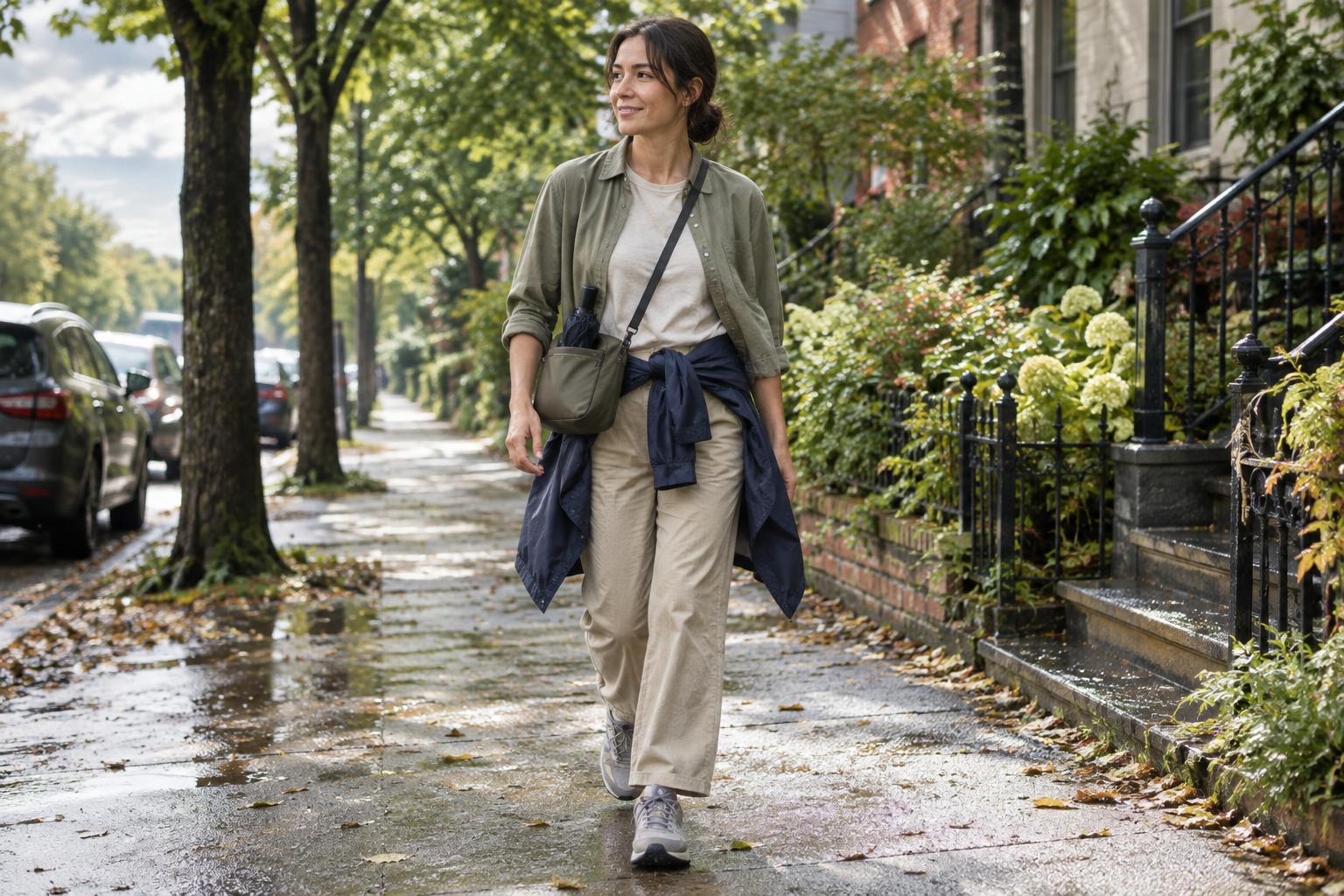
Start with the day you have planned
The most useful outfit begins with your plans, not just the temperature. A walk between cafés calls for different clothes than a long afternoon outdoors, even if both start on a cool morning. Think about how much time you will spend moving, sitting, traveling and stepping in and out of heated spaces. Check the forecast before you leave, but plan for the parts of the day when you may feel warmer or cooler than expected.
Choose a comfortable base outfit you would be happy to wear for most of the day. For many casual plans, that might be a T-shirt or light long-sleeved top with jeans, relaxed trousers or a skirt. Check the fit while sitting and walking, not only while standing at the mirror. If the base outfit works on its own, removing a layer later will feel like a choice rather than a compromise.
Build layers you can actually remove
A flexible outfit usually needs fewer pieces than an outfit built for every possible condition. Try a breathable base layer, one insulating layer and an outer layer suited to the likely wind or rain. A shirt worn open, a cardigan or a lightweight sweater can add warmth without making the outfit difficult to adjust. For the outer layer, consider whether you need wind protection, rain protection or simply another layer for a cool evening.
Pay attention to what happens when a layer comes off. A bulky coat that you must carry all afternoon can become inconvenient, even if it felt perfect when you left home. Look for a jacket that folds into a tote or can be worn comfortably over your arm. Pockets, easy fastenings and enough room through the shoulders often matter more on a changeable day than a perfectly streamlined silhouette.
Choose fabrics for comfort, not just warmth
Fabric changes how an outfit feels as the day shifts. A light cotton top may feel pleasant in mild weather but can stay damp if you get caught in a shower. A quick-drying base layer may be more comfortable for an active outing. Knits can provide warmth, while a tightly woven outer layer can help when the breeze picks up. None of these choices works for every person or plan, so use clothes you already know feel good against your skin.
Also consider weight and drying time. Thick denim or a heavy sweatshirt might be cozy at breakfast but less convenient if the afternoon turns warm. Lighter pieces are often easier to combine: two thin layers give you more options than one very thick piece. Before leaving, try on the full outfit and make sure the layers do not bunch at the sleeves or feel restrictive when you bend down.
Give shoes and small extras a job
Shoes can determine whether a casual outfit stays comfortable. If your plans include walking, choose a pair you have already worn for similar distances. On a day when the ground may be wet, soles with reliable grip and shoes that tolerate a little moisture may be more useful than a delicate pair you have to protect. Socks matter too: a spare pair takes little space and can make the trip home more pleasant after unexpected rain.
Small extras are most useful when they solve a specific problem. Sunglasses can help when clouds give way to bright light; a compact umbrella or packable rain layer may help if showers are likely. A scarf can add warmth without requiring another sweater. Pick one or two items based on your route and the space in your bag rather than carrying an entire backup wardrobe.
Make the outfit easy to repeat
Getting dressed is faster when your adaptable pieces work together. A simple color palette lets you switch jackets or shoes without rebuilding the outfit. Keep a few reliable combinations in mind, such as a familiar base outfit with either a light overshirt or a warmer cardigan. You do not need a special wardrobe for unpredictable weather; you need clothes that can be worn in more than one combination.
Before heading out, do a quick comfort check: can you walk in the shoes, remove a layer easily and carry what you take off? If the answer is yes, the outfit is ready to go. Changing weather may still surprise you, but a little flexibility can help you spend less of your weekend thinking about your clothes and more of it enjoying your plans.


