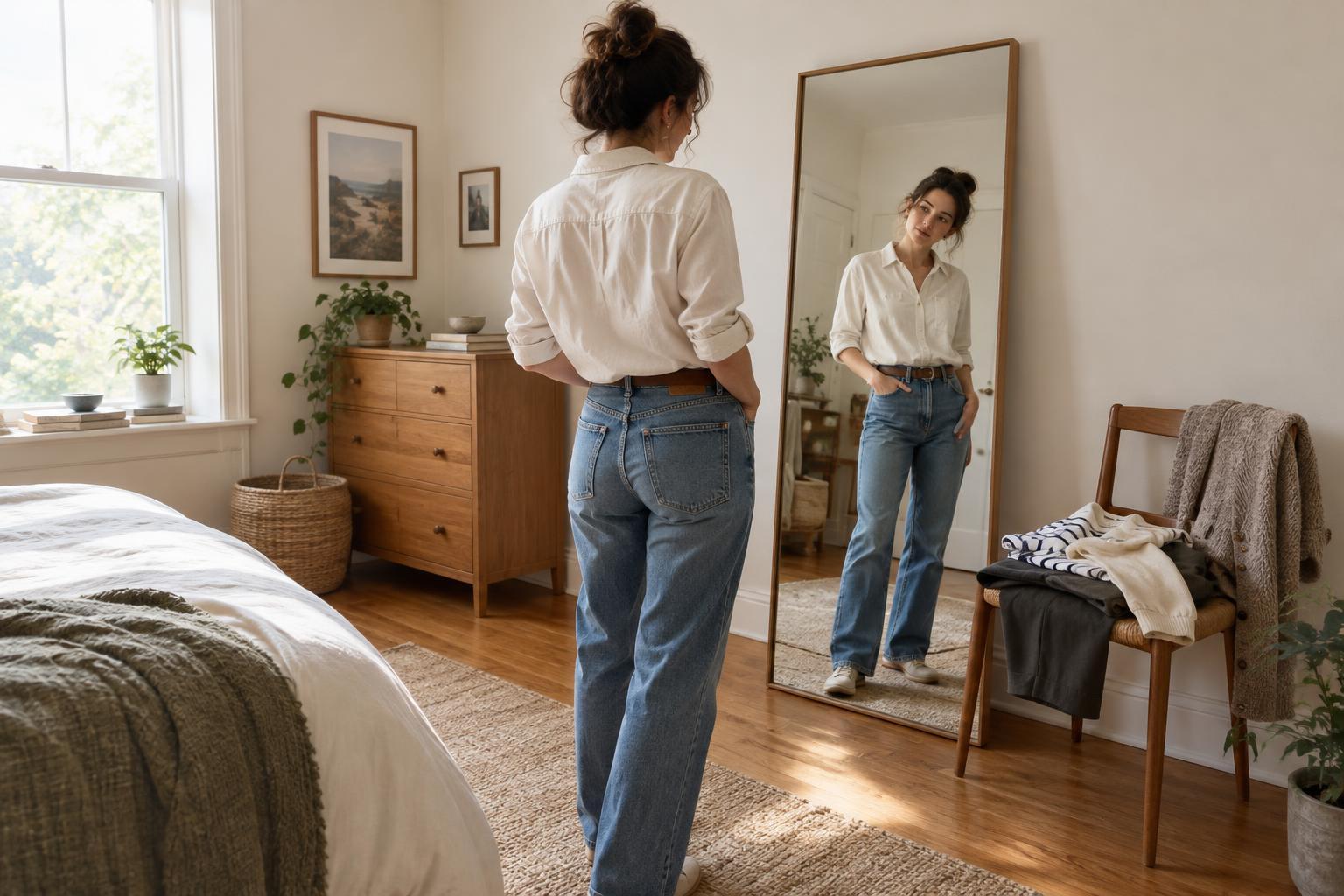
Start with the outfits you already choose
Defining your casual style does not have to begin with a shopping trip or a complete closet clear-out. Start with the clothes you reach for on ordinary days: the jeans you wear to run errands, the shirt you choose for a relaxed lunch, or the layer you grab before heading out. These choices offer better clues than an imagined version of your life. They show what works with your routines, your comfort preferences, and the time you have to get dressed.
Spend ten minutes listing three recent outfits you felt comfortable in. For each one, note the shape, fabric, color, and level of polish. Perhaps you like loose trousers with a close-fitting top, or you feel most like yourself in a simple outfit with one playful detail. Then note what you tend to change before leaving the house. Those last-minute swaps can reveal what an outfit needs to feel right to you.
Give your preferences useful names
You do not need to commit to a style label such as “minimal” or “classic.” A short description in your own words is more flexible. Try pairing two or three qualities you want your casual clothes to have: relaxed and tidy, soft and colorful, practical with a little texture. These words can guide you when you put outfits together without turning every choice into a rule.
Look through the pieces you own and set aside a few that match your description. Notice whether they share a feature: a certain neckline, a roomy fit, sturdy shoes, or colors you enjoy wearing together. Also pay attention to the pieces you admire but rarely wear. They may be uncomfortable, hard to pair, or better suited to an occasion that seldom comes up. You do not have to discard them; just avoid making them the foundation of your everyday plan.
Build a few repeatable outfit formulas
An outfit formula is a combination you can vary without starting from scratch. It might be straight-leg jeans, a plain top, an open shirt, and comfortable shoes. Another could be a casual dress, a light layer, and flat shoes. Use items already in your wardrobe to create two or three formulas for the situations you actually encounter, such as a walk, a café visit, or an afternoon at home that may turn into an outing.
Try each formula on rather than judging it on a hanger. Move around, sit down, and check whether the layers work together. If something feels off, change one element at a time. A half-tuck might give a loose outfit more shape; different shoes might make it feel less formal. Take a quick photo if it helps you remember combinations you like. The aim is not to document every outfit, but to make the next busy morning easier.
Use small details to make familiar clothes feel intentional
Once the basic combinations work, details can give them a more personal feel. Rolling sleeves, choosing a belt, repeating a color, or adding a familiar accessory can change the effect of clothes you have worn for years. A clean pair of shoes and a layer that sits comfortably can do more for an outfit than an extra item bought to fill an imagined gap.
Fit and care are worth checking before you decide a piece no longer suits you. A button that needs replacing, trousers that need hemming, or a knit that needs gentle care may be keeping useful clothes out of rotation. Some fixes take only a few minutes; others may require more effort than you want to spend. Choose the ones that would make a garment genuinely easier to wear, rather than treating every unworn item as a project.
Test your style for a weekend before changing anything
For a low-pressure experiment, choose three outfits from your existing clothes and wear them over a weekend or two. Notice what you adjust during the day and what you happily leave alone. If the same problem comes up repeatedly, name it precisely. “I need a comfortable layer for cooler walks” is more useful than “I need new clothes.” You may find the answer elsewhere in your closet, or you may decide to make do for now.
Casual style can change as your routines and tastes change. Keep the combinations that help you feel at ease, and revisit the rest when you have time. A wardrobe does not need to look entirely new to feel more like yours; often, the difference is knowing which pieces work together and giving yourself permission to wear them often.


