The easier instrument is the one you will pick up
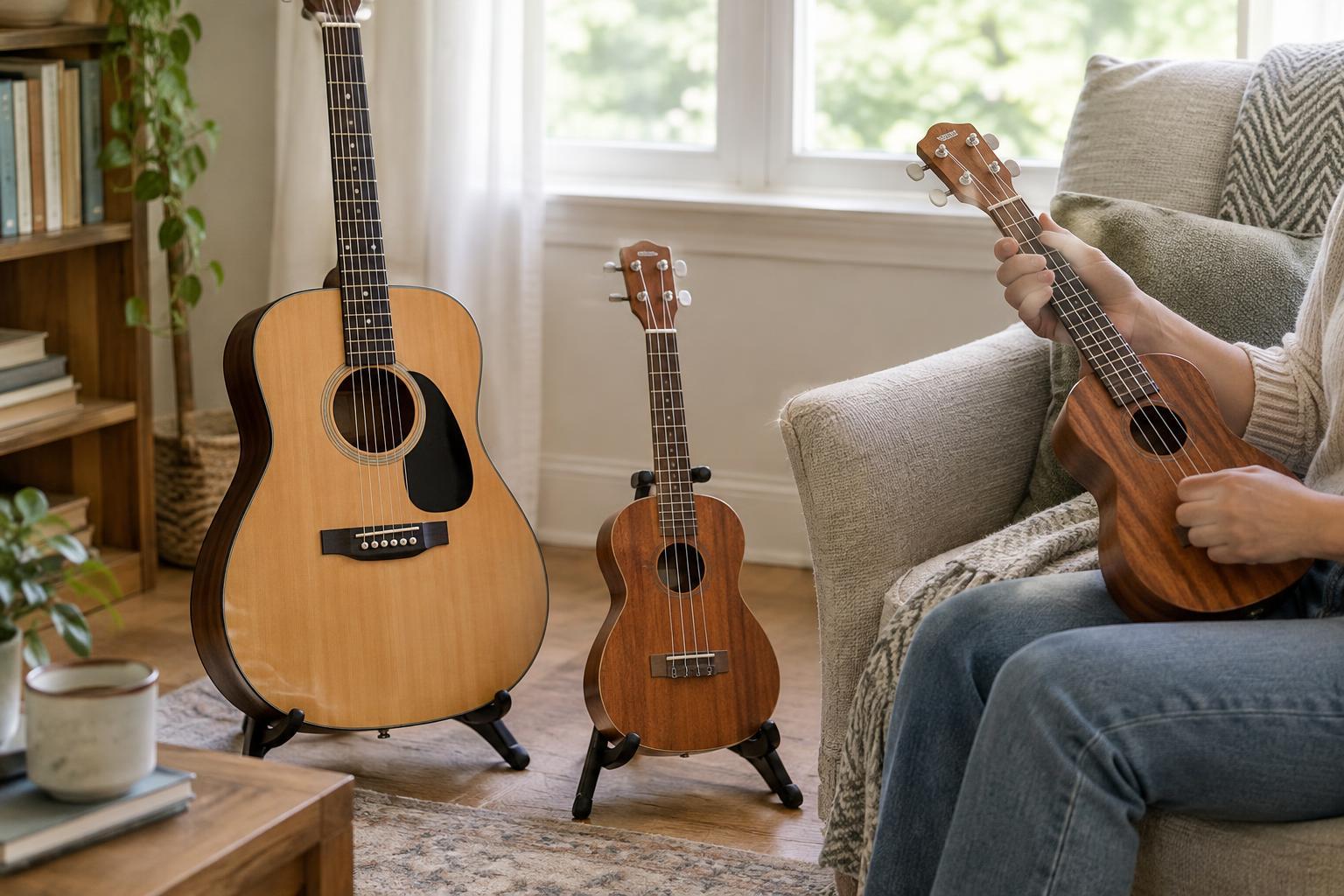
If you have only a few short windows to practice each week, the ukulele often offers a gentler start. Its small body is easy to keep nearby, and its four strings give beginners fewer things to manage while learning their first chord shapes. You may be able to strum along with a simple song before your fingers feel especially coordinated.
That does not make guitar the wrong choice. If the sound you want to make is unmistakably guitar—fuller strumming, familiar acoustic songs or eventually riffs and fingerpicking—motivation may matter more than a slightly steeper beginning. An instrument you love hearing is more likely to earn a place in your limited free time.
Compare the first physical hurdles
A ukulele is generally lighter and easier to hold than a guitar. Many beginners also find its nylon strings gentler on their fingertips than the steel strings on a common acoustic guitar. Its smaller neck can make some chord shapes less of a stretch. Comfort varies, though: a very small ukulele can feel cramped if your hands need more room, and pressing any new string instrument takes adjustment.
A guitar has six strings and a wider range of notes, but that also means more strings to tune, mute and avoid while strumming. Early chord changes may take patience, particularly when several fingers must land at once. Guitar size and setup make a difference. If an instrument is uncomfortable to hold or its strings feel unusually hard to press, trying another one may be more useful than assuming you lack ability.
Before choosing, hold each instrument in a relaxed seated position if you can. Try reaching the first few frets without hunching your shoulders or bending your wrist sharply. Notice which one feels inviting after a few minutes, not just which one looks easier from across the room.
Think about the songs you want to play
For simple chord-based singing, either instrument works. A ukulele can make an appealing companion for casual strumming, and many beginner chord shapes use only one or two fingers. Its bright, compact sound may suit the music you have in mind—or it may leave you wishing for the lower notes and fuller sound of a guitar.
Guitar gives you more room to explore bass notes, riffs and varied accompaniment as you improve. That versatility is valuable if those sounds are your goal, but you do not need to master them all at once. A beginner can start with a few chords and a steady rhythm on either instrument. Choose based on the kind of practice that sounds fun now, rather than every style you might someday learn.
Skills such as keeping time, listening for clean notes and moving smoothly between chords can carry from one instrument to the other. The fingerings and tuning are not identical, so switching later still involves learning. Starting with ukulele is not a required step toward guitar, and starting with guitar does not rule out trying ukulele later.
Make short practice sessions count
You do not need to reserve an entire afternoon to begin. Set a small, repeatable session: tune the instrument, practice two chord shapes, switch between them slowly, then strum through part of a song you like. Five attentive minutes can give you a clearer next step than a longer session spent jumping between unrelated tutorials. If your hands feel tired, pause rather than forcing another round of chord changes.
Keep the instrument accessible in a safe spot, with a tuner and your chosen chord notes nearby. Pick one easy song or rhythm pattern for the week so you spend less of your limited time deciding what to do. At the end of each session, note one small improvement and one thing to try next time. Progress may be uneven, especially when you practice only on weekends; a simple routine makes it easier to return without starting over mentally.
Use a low-pressure test to decide
If possible, borrow or try each instrument before buying. Give both the same small task: tune it, learn two basic chords and play a slow, even strum. Ask yourself which sound you enjoy, which feels comfortable in your hands and which you would gladly practice again tomorrow. The quickest first chord is not necessarily the best long-term match.
Choose ukulele if portability, gentle-feeling strings and a straightforward entry into strumming appeal to you. Choose guitar if its sound and musical possibilities are what draw you in, even if your first chord changes take longer. With limited practice time, the winning choice is not the instrument with the easiest reputation. It is the one that makes a short session feel worth coming back to.