Why space matters
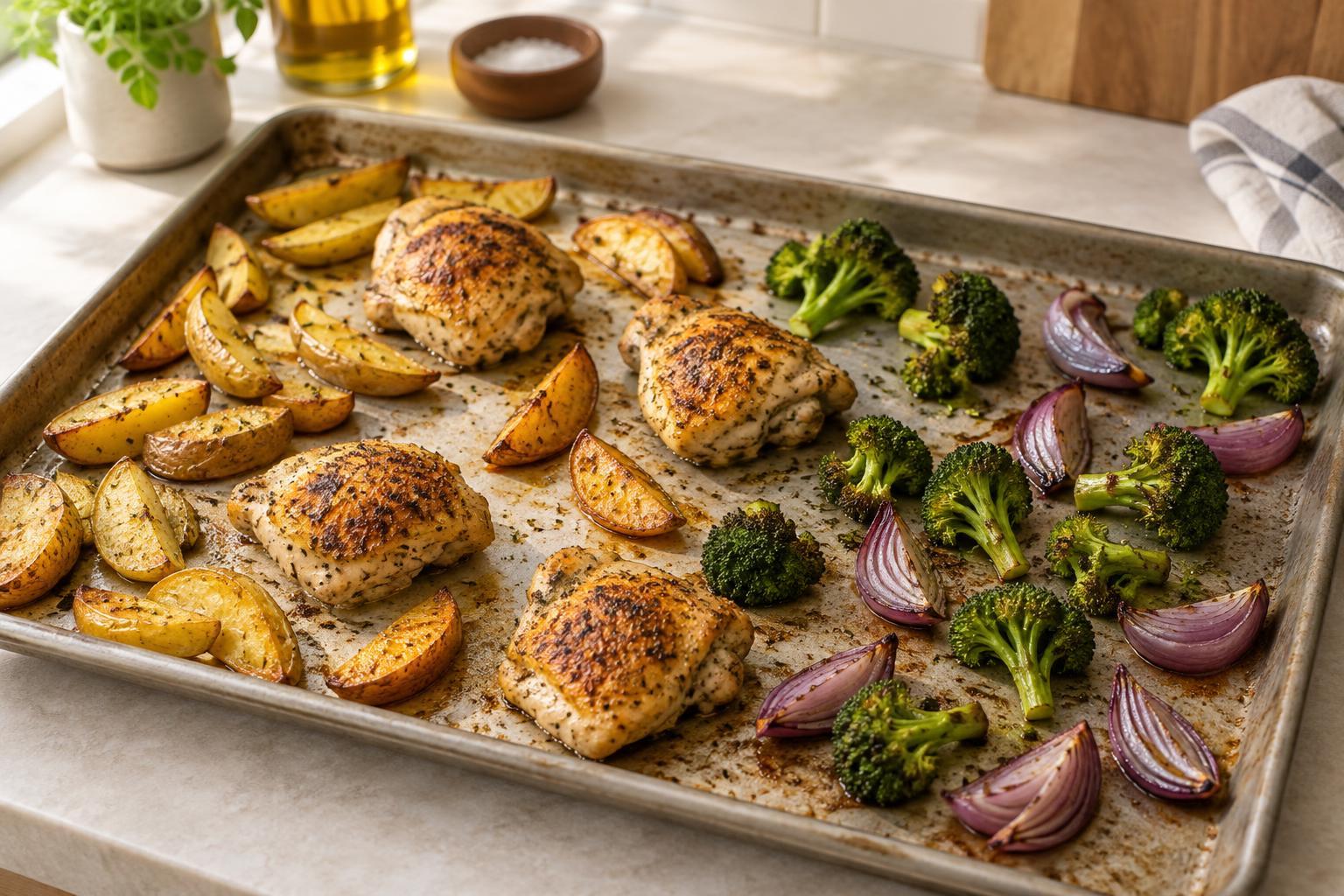
A sheet-pan dinner promises one tray and little cleanup, but it works best when hot air can move around the food. Vegetables release moisture as they cook. If they are piled together, that moisture lingers between pieces and softens their surfaces. Spread out in a single layer, they have a better chance to develop browned edges while becoming tender inside.
Before turning on the oven, look at your ingredients and your pan. Aim for a single layer with small gaps between most pieces. You do not need to arrange them with precision; the goal is to avoid a solid carpet of food. If the pan looks full while everything is still raw, it is unlikely to feel roomier once you add oil, seasoning, and a protein.
Plan the meal around the pan
Start with a sturdy, rimmed sheet pan large enough for the amount you want to cook. The rim helps contain oil and juices, while the broad surface gives ingredients room to spread. A large pan can often handle a simple combination of one protein and one or two vegetables, but piece size matters as much as the ingredient count. A heap of chopped potatoes can take up more useful space than a few larger pieces of fish.
A quick dry run saves time: put the prepared ingredients on the unheated pan before seasoning them. Spread them into a single layer. If you must stack pieces or press everything tightly together, move some food to a second pan. Two uncrowded pans are usually more useful than one overflowing pan, even if they create one extra tray to wash. If your oven has room for both, swap their rack positions partway through cooking so each has a chance to brown.
Give slower ingredients a head start
Space is only part of the plan. Potatoes, carrots, and other dense vegetables often need more time than quick-cooking ingredients such as zucchini, asparagus, or thin fish fillets. Cut similarly dense foods into roughly even pieces, then begin roasting the slower group first. Add the faster group later, placing it in the open areas rather than dumping it over what is already cooking.
For an easy combination, start bite-size potatoes and carrots with oil and seasoning. Once they have begun to soften, make space for broccoli florets and a protein that suits roasting. Check each component rather than relying on a single timer: vegetables should be tender to your liking, and meat or poultry should reach a safe internal temperature when checked with a food thermometer. Keep utensils and surfaces used for raw meat separate from ready-to-eat food.
Use oil and moisture with restraint
Toss ingredients with enough oil for a light coating, not enough to leave puddles on the tray. Excess oil and wet sauces can collect between crowded pieces, making it harder for surfaces to brown. Pat particularly wet ingredients dry before seasoning them, and save a generous splash of sauce, citrus juice, or dressing for after roasting.
Try to leave a little room around ingredients that release a lot of liquid, such as mushrooms or tomatoes. If you want both juicy and crisp components, consider keeping them on separate parts of the pan or adding the juicy ones later. A small amount of moisture is normal; the aim is to prevent the whole dinner from sitting in it.
Make adjustments while dinner cooks
About halfway through cooking, take a look. If one area is browning faster, turn or shift those pieces. If the food has settled into a crowded cluster, spread it back out. Resist stirring constantly, though: leaving pieces in contact with the hot pan for a while helps their surfaces brown.
If you discover that you have made too much for the pan, the fix is straightforward. Transfer some pieces to another tray, or cook a portion later and use it for another meal. For a low-effort weekend dinner, a roomy pan, a sensible order of additions, and a final check for doneness will do more than a complicated recipe.