Start with the clothes you already like wearing
Looking put together does not require a new wardrobe or a complicated formula. Begin with an outfit you would happily wear on an ordinary weekend: jeans and a T-shirt, relaxed trousers and a sweater, or a casual dress with comfortable shoes. When the base feels like you, small adjustments are easier to make and more likely to become habits.
Before adding anything, check how each piece sits while you move. A shoulder seam that stays in place, trousers that do not need constant pulling up, and a top that lets you sit comfortably can make an outfit feel more intentional. Fit does not have to mean tight or tailored; relaxed clothes can look considered when their proportions work together. If both your top and bottoms are roomy, try a partial tuck, a shorter layer, or a visible waistline to give the outfit some shape.
Give the outfit a simple color plan
A limited palette makes separate pieces feel as though they belong together. Choose one or two main colors, then let another color appear in a smaller detail. For example, dark jeans and a navy top can leave room for a lighter jacket, scarf, or bag. Neutrals are useful, but they are not mandatory: two colors you enjoy wearing can work just as well.
You can also repeat a color once to connect an outfit. Shoes that echo a belt, or a bag that picks up a shade in your shirt, create a quiet sense of order. There is no need to match everything exactly. If choosing colors slows you down, keep a few reliable combinations in mind and reuse them. Repetition is a practical shortcut, not a sign that an outfit lacks imagination.
Use one layer or finishing detail
A third piece can make a basic outfit feel complete. An open overshirt, lightweight cardigan, casual blazer, or denim jacket adds structure without making the look formal. Pick a layer that suits the weather and your plans, and check that it works both on and off. A jacket that looks good but has nowhere to go once you are indoors may be more trouble than it is worth.
Accessories can do the same job on a smaller scale. A belt, simple watch, scarf, or favorite pair of earrings gives the eye a point of focus. Choose one detail you want to notice rather than putting on everything at once. For a short outing, the best finishing piece is often the one you can forget about after leaving home: it stays comfortable, does its job, and does not need adjusting.
Pay attention to shoes and everyday condition
Shoes can change the mood of an outfit quickly. Clean sneakers keep a casual look easygoing, while loafers, simple boots, or sandals may make the same clothes feel a little sharper. Choose for the walking and weather you expect, not just for the mirror. An outfit rarely feels polished if your shoes make you reluctant to move.
The condition of clothes matters more than a perfect combination. A quick check for lint, noticeable wrinkles, loose threads, and marks takes little time. Smooth a collar, straighten a hem, or swap a tired top for a fresh one if needed. These are small acts of care, not a demand that every item look new. Clothes meant for real weekends can show some wear and still look good.
Build a two-minute leaving-the-house check
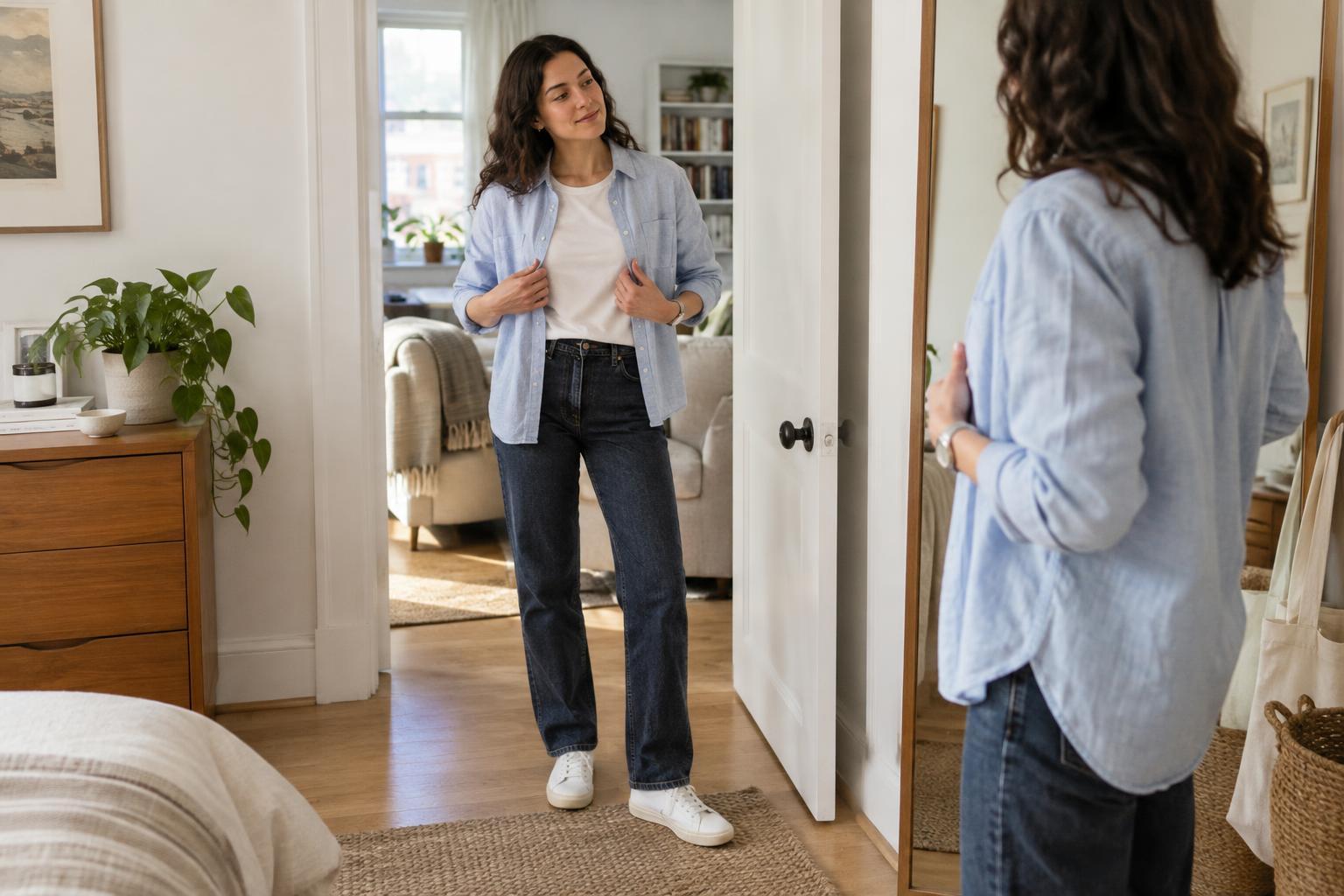
When time is limited, decide in advance what counts as ready. Look at the whole outfit in a mirror, then ask three questions: Can I move comfortably? Is there one clear color or shape connecting the pieces? Is anything distracting me because it needs fixing? If the answers are mostly yes, stop adjusting and go enjoy your day.
It can help to remember combinations that have worked before. Take a private photo or make a short note such as “striped top, dark trousers, canvas jacket.” On a busy Saturday, that record removes some of the guesswork. Feeling put together is not about passing a style test. It is about wearing comfortable clothes with enough attention to detail that you can get on with your plans.