Start with an easy place, not the darkest place
A stargazing outing does not have to involve a long drive or a remote trail. A nearby park, public overlook or open space can offer a pleasant view of the sky, even if streetlights limit how many stars you see. For a first trip, choose somewhere familiar with a clear place to stand or sit and a straightforward way back home.
Check whether the place is open after dark; daytime access does not always mean nighttime access. Look for practical details such as parking, transit options, paths, seating and restrooms if you need them. Avoid entering closed areas or stepping away from established paths to find a darker patch of ground. A comfortable, permitted spot is more useful than an impressive one that is difficult to reach or leave.
Let the conditions shape your expectations
Before you head out, check the local forecast for cloud cover, rain, wind and temperature. Clear skies may make it easier to see stars, but a chilly breeze can shorten an otherwise lovely visit. Conditions can change, so treat the forecast as a planning aid rather than a promise. If the sky looks uninviting, a short evening walk or a postponed trip may be the better choice.
The moon can also change the experience. A bright moon may make faint stars harder to notice, but it can be a satisfying sight on its own. You do not need to plan around a particular celestial event. Decide whether you would enjoy simply looking up, noticing a few bright points and spending quiet time outdoors. That keeps the outing worthwhile even when the sky is less dramatic than you hoped.
Pack for sitting still
The biggest comfort surprise on a short night outing is often how different it feels to stand still rather than walk. Dress for the temperature you expect during the visit, and consider an extra layer if the evening may cool down. Comfortable shoes matter even when you plan to stay near a bench: the path from a parking area or transit stop may be uneven or poorly lit.
Keep the rest of your kit modest. A small flashlight, charged phone, water and something to sit on may be enough. If you bring a light, aim it toward the ground when walking and be considerate of other visitors. You can put your phone away once you settle in; checking it repeatedly may make it harder to enjoy the quieter pace. Binoculars or an astronomy app are optional, not requirements.
Give the visit a simple shape
Set a loose time limit before leaving home. You might allow enough time to travel, settle in for a short stretch and return without feeling rushed. Tell anyone joining you what kind of outing it is: a calm look at the sky, not a mission to identify every object overhead. If you are going alone, let someone know your destination and when you expect to return.
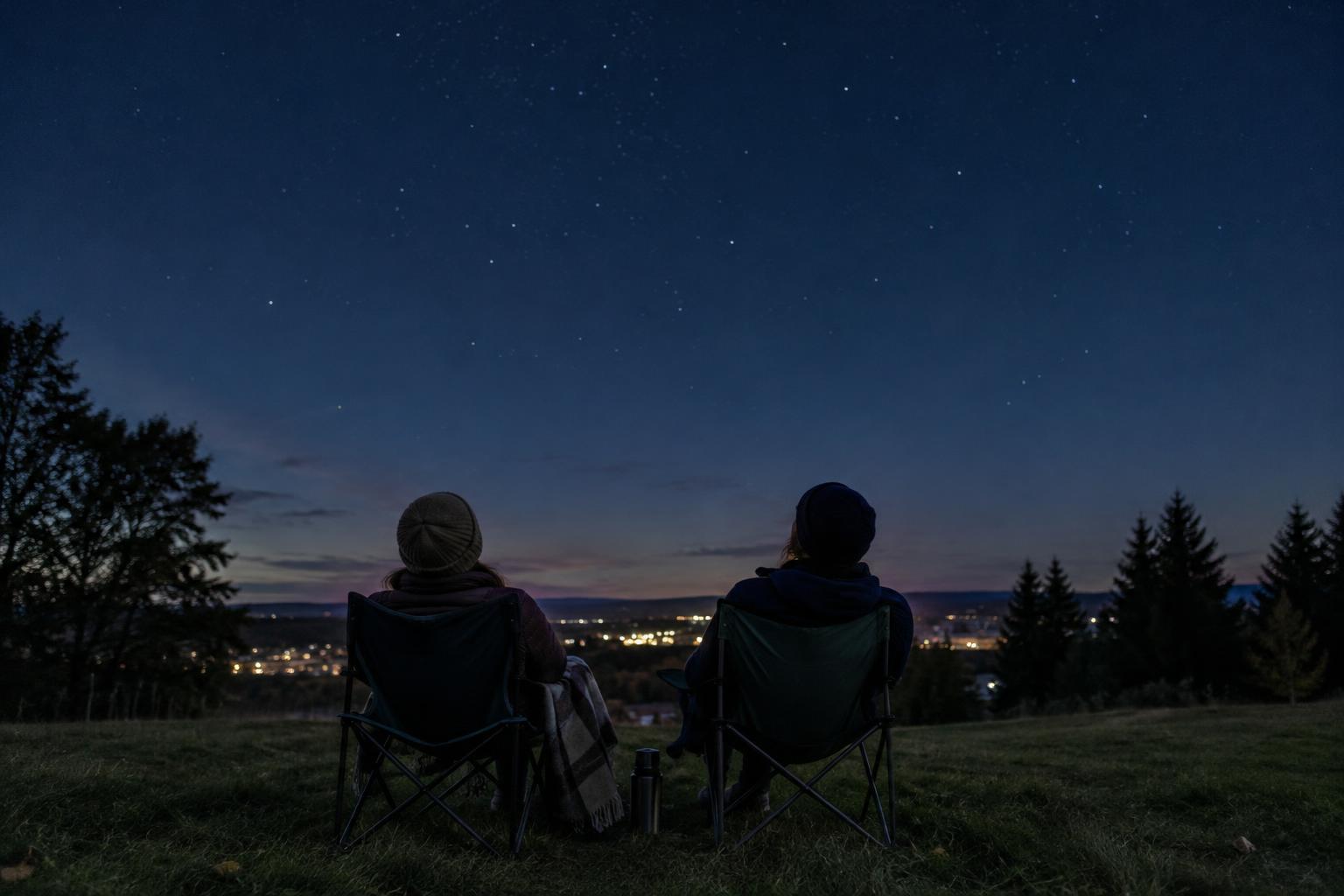
Once you arrive, take a moment to get oriented while you can still see your route clearly. Find your sitting spot, notice the nearest exit and decide where you will walk if you need to leave. Then let yourself look around without an agenda. You can compare the brighter parts of the sky, listen to the sounds of the area or simply enjoy being outside at an unusual hour.
Make it easy to call it a success
A good stargazing outing is not measured by how many stars you identify. Clouds may move in, a nearby light may be brighter than expected or you may feel ready to go home after a few minutes. None of those outcomes makes the trip a failure. The point is to create a small break from your usual weekend routine, with an easy way to head home when you are ready.
Afterward, remember one practical detail for next time: whether the spot felt comfortable, what layer you wished you had brought or which part of the trip took longer than expected. That small note can help you plan a better return visit without turning a restful outing into a project.